|
How to eat pumpkin in the new yearTime:2018-04-17 Two middle-aged women suffered from sudden vision loss. They both suffered from systemic lupus erythematosus. The reasons were quite different. One completely recovered and the other was blind for life. What was the reason behind this? Since December 2021, Ms. Ji has suffered from systemic arthralgia, Raynaud's disease (a group of syndromes in which the fingers / toes are pale and purple and then turn red due to cold or emotional excitement) and edema of both lower limbs. She was diagnosed as "systemic lupus erythematosus and lupus nephritis" in the Department of Nephrology and rheumatology of our hospital. After receiving treatment with glucocorticoids and biological agents, the disease control was very smooth, and it was completely relieved in only 3 months. However, just one month ago, Ms. Ji told Yan Xiaoqian, the attending physician who had been following up, that she suddenly had pain in her left eye with decreased vision. The ophthalmic examination of the local hospital said that it was conjunctivitis. After levofloxacin eye drops were administered externally, the symptoms did not improve. Instead, she had pain in her right eye with decreased vision. Yan Xiaoqian's attending physician hurried to ask Ms. Ji to come to the hospital for examination. After detailed ophthalmologic examination, Ms. Ji's eyeball was indeed free of any problems. The inflammatory indicators were normal. The lupus related indicators, except for immunoglobulin G and anti DS DNA, were slightly higher than before. The complement was completely normal, the urine protein was still in remission, and no space occupying changes were seen in the cranial magnetic resonance. Why is this? When everyone was at a loss, Wang Bin, director of Ophthalmology, found that Ms. Ji's eyeball movement range was limited during careful physical examination, which may be caused by the swelling of soft tissue behind her eyeball. In order to further clarify the intracranial condition of Ms. Ji, we contacted the neurology department to re read the film and improve a series of examinations of CSF pathogens. Through the joint cooperation of Ophthalmology, Nephrology and rheumatology department and neurology department, it was finally determined that Ms. Ji was suffering from rare SLE optic neuritis. This disease is even more rare in the rare SLE patients. The incidence rate is only about 1%, and the patients can appear in the stable stage. The clinical manifestation is unilateral ocular pain with decreased vision. The fundus examination is often not different. The permanent loss of vision is the most serious consequence of optic neuritis. The economic examination took several days, but Ms. Ji's symptoms were significantly relieved after the diagnosis was made. At the time of discharge, Ms. Ji said that she had drawn a lot of blood and taken a lot of pictures in the hospital. Although she did not understand why she had to do these tests now, I believe that the doctors of Tongde hospital must have done these tests. Fortunately, they were transferred here in time according to the doctor's advice. The doctors here are very conscientious! Ms. Li, who also suffers from systemic lupus erythematosus, is not so lucky. Ms. Li has been diagnosed with SLE in Shanghai for 2 years. She has used large doses of glucocorticoids and immunosuppressants. At the same time, her blood sugar is not well controlled and her follow-up is not standardized. In May 2021, Ms. Li was diagnosed with immune acute uveitis secondary to systemic lupus erythematosus in the ophthalmology department of the local hospital due to sudden blindness. She was injected with dexamethasone by needle and intravenous medication. After the symptoms were still not improved, she was transferred to the Department of Nephrology and rheumatology of our hospital. After admission, we also evaluated her general condition. It was found that Ms. Li had multiple space occupying lesions in the brain and lungs in addition to severe uveitis. In combination with her previous history of using a large amount of glucocorticoids and immunosuppressants, we firmly believe that she is not immune uveitis, but a systemic lesion caused by infection. After intraocular puncture and cerebrospinal fluid puncture, Ms. Li was finally diagnosed with disseminated aspergillosis, that is, her brain, eyeball and lungs were all pus caused by Aspergillus. After the clear diagnosis, we decisively withdrew the hormone and gave targeted antifungal treatment and ophthalmic surgery. After all-out treatment, Ms. Li's infection was controlled and her eyeball structure was saved. Unfortunately, her vision was permanently blind because she missed the best treatment time.
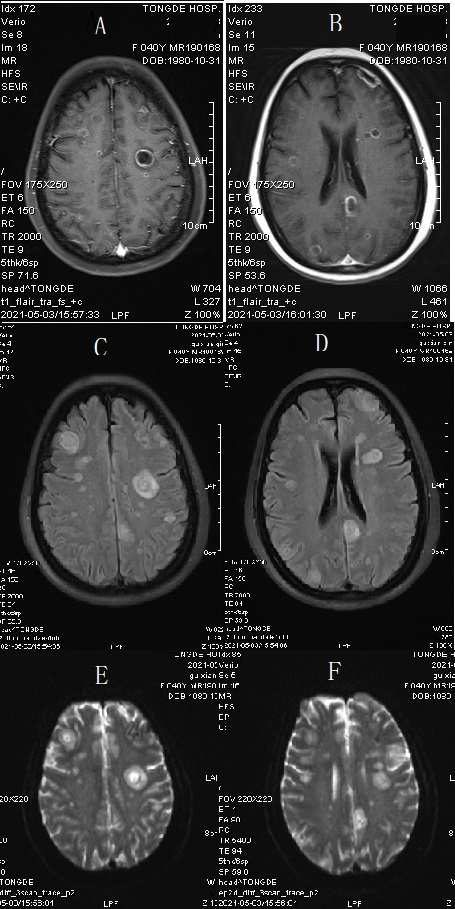
Figure 1. MR enhancement of the patient's head (multi site space occupying lesions)
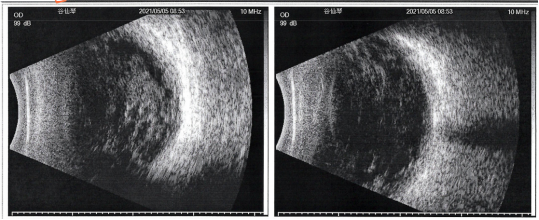
Figure 2. Ultrasound image of the patient's eyes (vitreous opacity) Systemic lupus erythematosus (SLE) is an autoimmune disease that can lead to damage of multiple systems in the body. Because the clinical manifestations of the disease are variable, it is often called "SLE can do everything" by rheumatism. The common clinical manifestations are facial butterfly erythema, repeated oral ulcers, photoallergy, arthralgia, anemia, thrombocytopenia, proteinuria, hematuria, etc. However, when the disease performance is not typical, such as intracranial damage, eye damage, thrombosis, etc., it is particularly easy to be missed and misdiagnosed by patients and non specialists. When systemic lupus erythematosus is complicated with sudden visual acuity decline, the possible causes include central retinal artery embolism (CRAO), acute uveitis (including infection and immune factors), intracranial tumors, glaucoma, acute optic neuritis and drug-related retinal damage, which need to be fully identified, evaluated and treated in time. If missed diagnosis or misdiagnosis, it may lead to permanent visual acuity loss and other serious consequences. 5.10 is the world lupus day. On this occasion, the Department of Nephrology and rheumatology of our hospital will hold such wonderful activities as free clinic, online video, face-to-face Q & A with famous doctors, and online science popularization. We specially invite you to know this "butterfly disease" that loves camouflage. |